

Facing -25°C Harsh Climate Conditions: Far East Battery’s Fully Liquid-Cooled ESS Powers a Benchmark Grid-Side Project in the Baltics
Categories:Date:2026-05-20
Recently, the 5MW/10MWh grid-side energy storage project in Latvia, developed by Far East Battery, was successfully commissioned. As a key demonstration project in the local grid-side energy storage sector, the project leverages advanced liquid-cooling ESS technology and an innovative system architecture to achieve deep integration with a local photovoltaic power plant. While enhancing renewable energy consumption efficiency, the project also marks another important step in Far East Battery’s global expansion into the Baltic market.
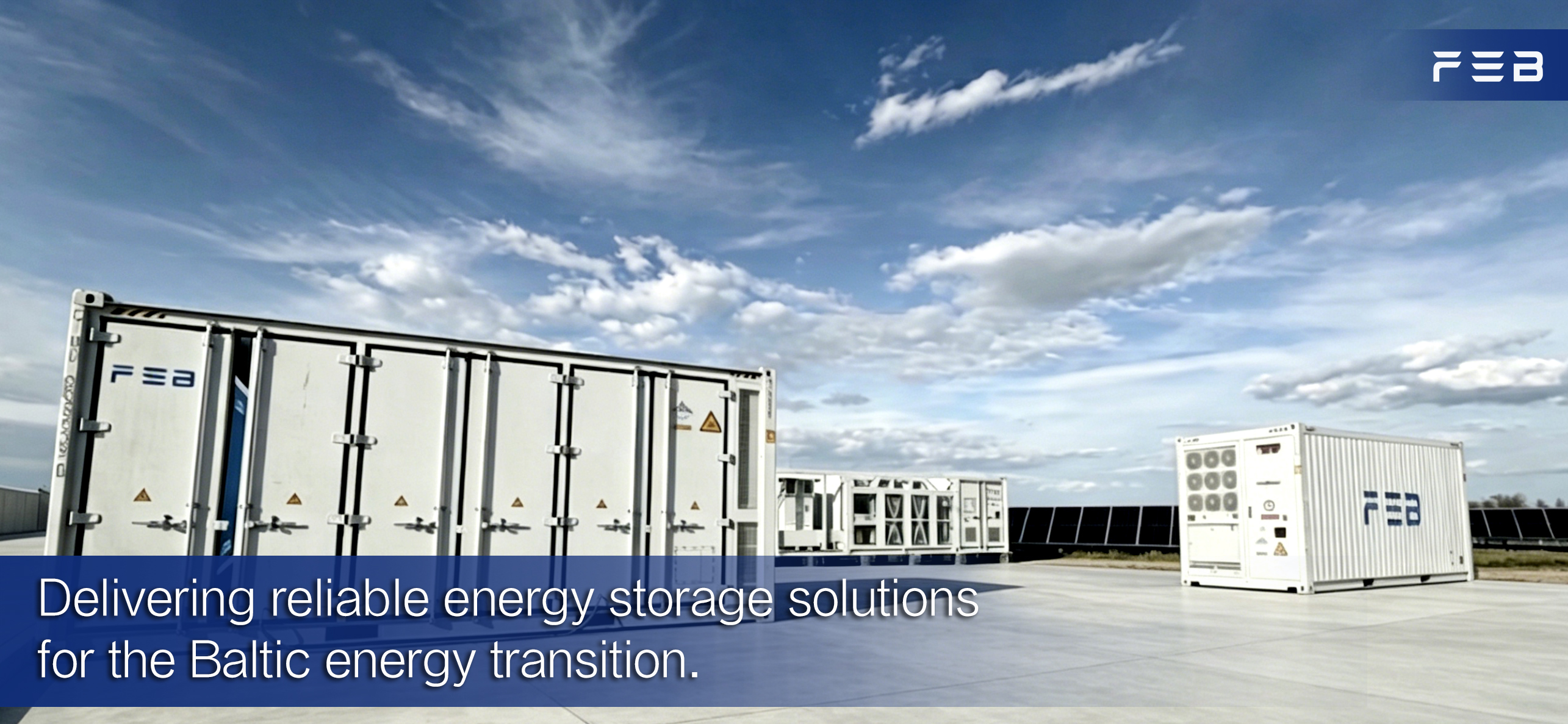
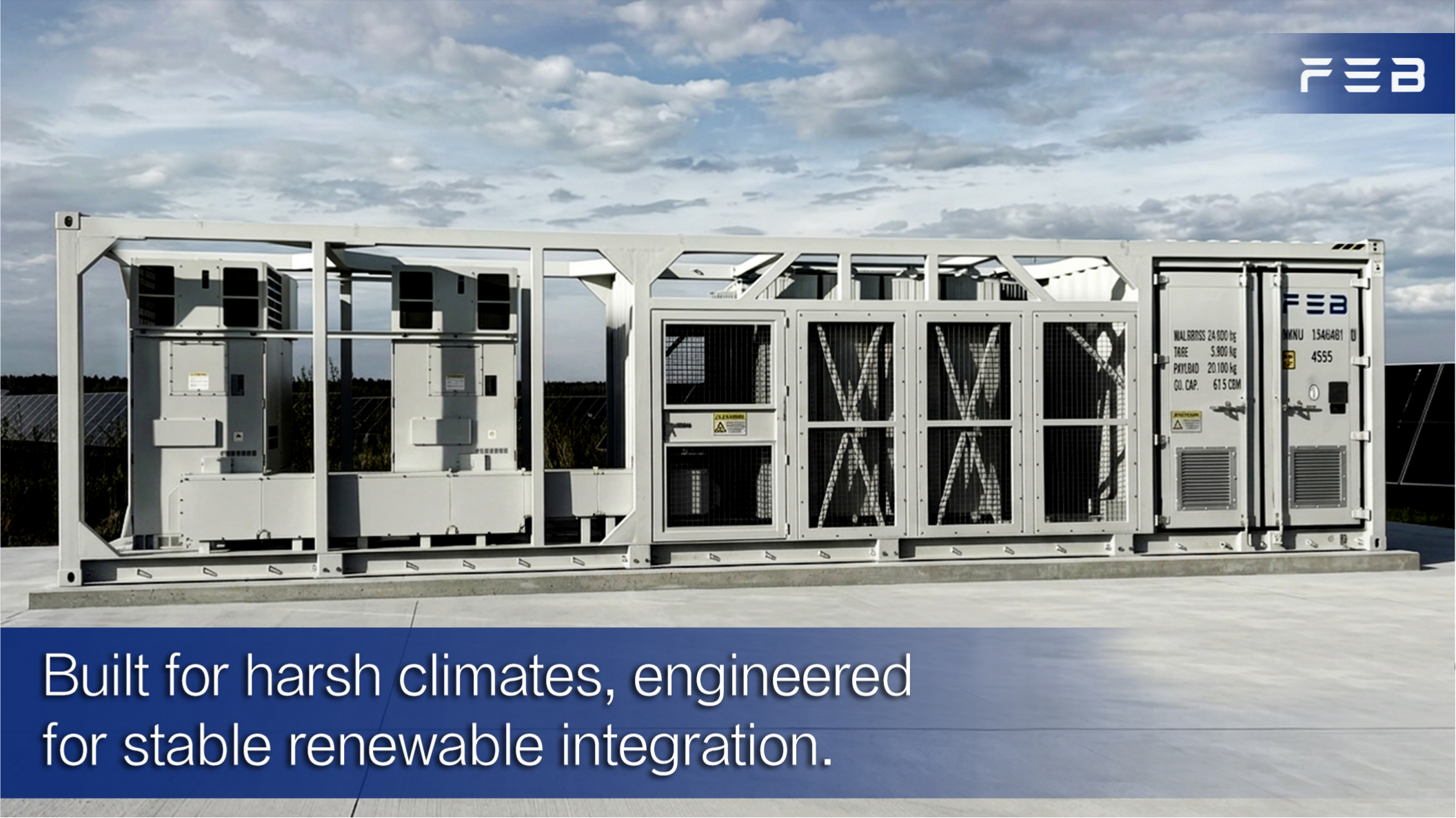
To address Latvia’s cold, humid climate and significant day-night temperature variations, Far East Battery tailored a highly reliable fully liquid-cooled energy storage solution for the project. The system adopts an innovative “dual-stack + dual-branch” architecture, with two PowerSTROM 5000 liquid-cooled energy storage containers independently paired with two liquid-cooled Power Conversion Systems (PCS), enabling independent operation and maintenance for each stack.
Compared with traditional single-stack systems, this design effectively eliminates the “single-point shutdown” issue. Even if one battery stack or branch encounters a fault, the other side can continue stable operation without requiring a complete system shutdown. This significantly improves system availability and operational continuity while reducing maintenance losses, providing more reliable support for long-term stable grid integration of the photovoltaic plant.
As the project’s core energy storage unit, the PowerSTROM 5000 offers a standard single-unit capacity of 5.016MWh, featuring high energy density, high efficiency, and excellent system stability. Its flexible configuration not only improves operational efficiency but also extends cycle life and reduces long-term operating costs.
In terms of thermal management, the integrated 2.5MW liquid-cooled PCS delivers significantly higher heat dissipation efficiency compared with conventional air-cooled solutions. The system maintains the temperature difference between key IGBT components within 2°C, effectively reducing component aging and mitigating the “heat island effect” on the site.
The system supports stable operation in ambient temperatures ranging from -25°C to 60°C and can maintain full-load operation without derating even at 45°C, ensuring long-term stability and lifecycle performance under challenging climate conditions.
As a typical grid-side energy storage project, the system operates through “peak shaving + output smoothing” mechanisms, forming efficient synergy with the local PV plant and effectively addressing intermittency and power fluctuation challenges caused by rapid solar capacity growth.
During periods of high solar generation, the ESS stores excess electricity to reduce curtailment losses, while during peak demand periods it releases stored energy steadily to support grid stability. Once fully operational, the project is expected to significantly improve renewable energy utilization and grid integration stability while enhancing the overall operational profitability of the photovoltaic plant.
The successful delivery of this project not only demonstrates Far East Battery’s comprehensive strengths in liquid-cooled ESS technology and overseas project execution but also provides a replicable benchmark for large-scale application of Chinese energy storage solutions in the Baltic region.
Looking ahead, Far East Battery will continue expanding its presence in the European market, focusing on renewable generation, grid-side regulation, and commercial & industrial ESS scenarios. By delivering safer, more reliable, and higher-return energy storage solutions, the company remains committed to supporting the global green energy transition.